
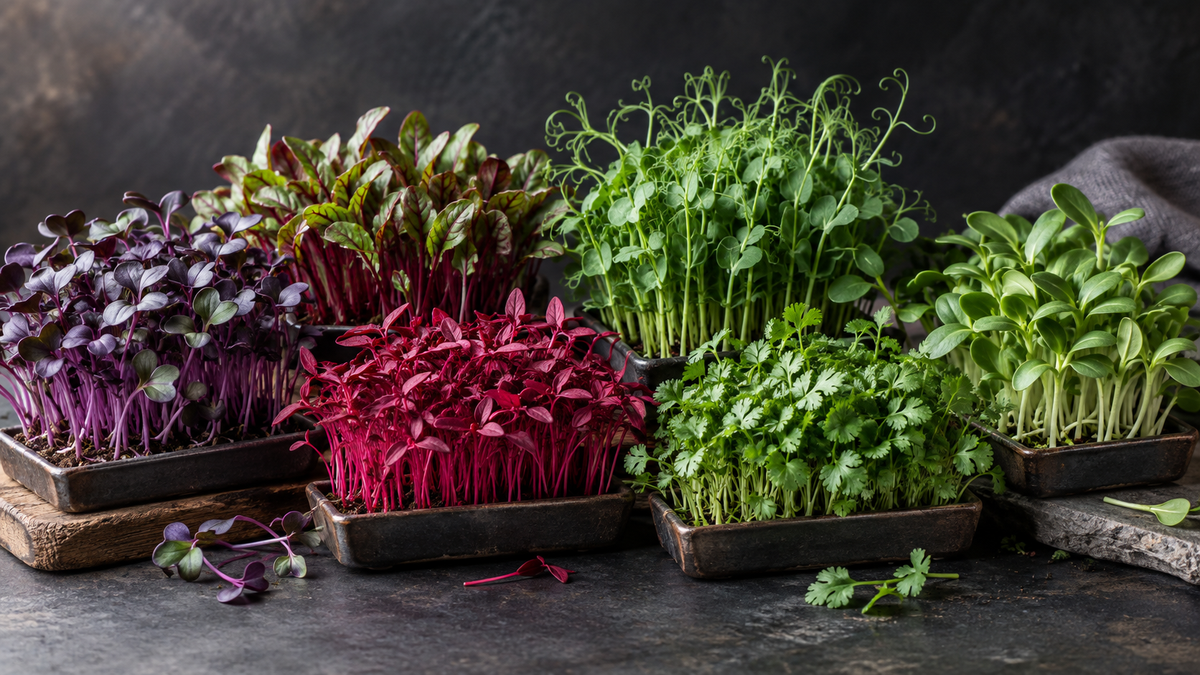
Colorful Microgreens: 6 Unique Varieties Growers Should Know
Microgreens are often described as tiny greens, but the category includes far more than green leaves. Depending on the variety, a tray can produce purple foliage, red stems, fine tendrils, strong herbal aromas, peppery flavors, or subtly sweet shoots.
For home growers, unusual microgreens make meals more interesting. For commercial growers, color and texture can help a product stand out in chef samples, farmers market displays, retail clamshells, and social media photographs.
Here are six distinctive microgreen varieties worth exploring.
1. Sango Radish Microgreens
Sango Radish is immediately recognizable for its deep purple stems and leaves. It delivers the bold, peppery flavor customers expect from radish while adding striking color to salads, tacos, sandwiches, and plated dishes.
That combination of color and familiar flavor can make Sango Radish microgreen seed useful for both new and experienced growers. Chefs can use it as a contrasting garnish, while direct-market growers can explain it simply: a colorful microgreen with a fresh radish bite.
Sango can also be sold on its own rather than hidden inside a mix. A single-variety package lets the customer see and taste what makes it different.
2. Bulls Blood Beet Microgreens
Bulls Blood Beet is valued for dramatic color. Beet microgreens can develop rich red or burgundy tones that bring depth to a tray and visual contrast to food presentation. Their appearance makes them especially attractive to chefs and customers who shop with their eyes first.
Beets generally require more patience than many quick brassica crops. Germination and emergence can be less uniform, so growers should trial seed density, moisture, and harvest timing in their own environment. The rough seed structures commonly called beet seeds are actually multigerm clusters, which helps explain why emergence may look different from a crop such as radish.
Use Bulls Blood as a specialty offering and price it according to its production time, usable yield, and customer value rather than comparing it only with faster crops.
3. Red Amaranth Microgreens
Red amaranth produces delicate, intensely colored growth that can range from reddish pink to deep burgundy. The slender stems and fine leaves give it an elegant appearance, making it well suited to careful plating and premium garnish applications.
Amaranth seed is extremely small. Even distribution is critical, and excessive watering can easily disturb the seed or create uneven patches. Use a fine, controlled approach to moisture and avoid burying seed too deeply.
Because the harvested crop is delicate, packaging and handling deserve attention. A beautiful tray can lose value if the product is crushed during packing or delivery. Test container depth and pack weight before offering it commercially.
4. Afila Tendril Pea Microgreens
Color is not the only way to create visual interest. Afila Tendril Pea develops curling tendrils that add movement and texture to the crop. Its crisp stems and sweet, fresh pea flavor make it useful in salads, sandwiches, garnishes, and gourmet dishes.
Afila pea shoots can appeal to chefs because the tendrils provide a distinctive finishing element. They can also work well at farmers markets, where the familiar flavor makes sampling easy.
Pea is a larger seed and is commonly soaked before planting. Plan for the crop’s height and give it enough rack clearance as it develops.
5. Leisure Split Cilantro Microgreens
Cilantro microgreens offer a strong aroma and a bold cilantro flavor that can be more intense than the mature herb. Leisure Split Cilantro is produced from cilantro seed fruit that has been separated into individual seeds.
This variety can be marketed to chefs preparing tacos, soups, curries, rice dishes, seafood, and other foods that pair well with cilantro. It also gives growers a way to offer a recognizable herb in a different format.
Cilantro is not typically chosen for the fastest turnaround. Build its longer production cycle into pricing and scheduling, and test it thoroughly before promising recurring volume. Its distinctive flavor, however, can make it valuable to the right buyer.
6. Hales Best Cantaloupe Microgreens
Cantaloupe may not be the first crop customers associate with microgreens, which is exactly what makes it interesting. Hales Best Cantaloupe produces tender green shoots with a fresh, subtly sweet melon flavor.
For market growers, cantaloupe can become a sampling crop that starts conversations. For home growers, it brings variety to salads and creative dishes. When describing it, focus on the unexpected flavor and tender texture rather than making assumptions about how familiar customers are with melon microgreens.
How to Sell Unique Microgreen Varieties
Distinctive crops need clear descriptions. Use the variety name, color, flavor, texture, and a few suggested uses. A sign that says “Sango Radish—deep purple with a peppery radish bite” communicates more value than a label that simply says “microgreens.”
Sampling can help when local rules and your food-safety procedures allow it. A customer may hesitate to purchase cilantro or cantaloupe microgreens until tasting them. Chefs may respond well to a small, labeled sample containing harvest date, storage information, and contact details.
Photograph the actual crop you sell. Accurate images establish expectations and give customers ideas for using the product. Strong natural color often needs little embellishment.
Choosing the Right Specialty Crops
Do not add a variety only because it looks impressive. Test germination, uniformity, crop time, usable yield, packaging, shelf performance, and customer response. Compare the total production cost with a realistic selling price.
Begin with one or two distinctive varieties that complement your core crops. Sango Radish can add purple color and peppery flavor, Afila pea can add tendrils and crunch, and cilantro or cantaloupe can provide a memorable taste. Red amaranth and Bulls Blood Beet may support premium visual applications when your customers value them.
The best microgreen selection balances dependable staples with varieties that give customers a reason to remember you. With careful testing and clear marketing, colorful and unusual microgreens can become more than decoration—they can become signature products within your farm or growing business.