
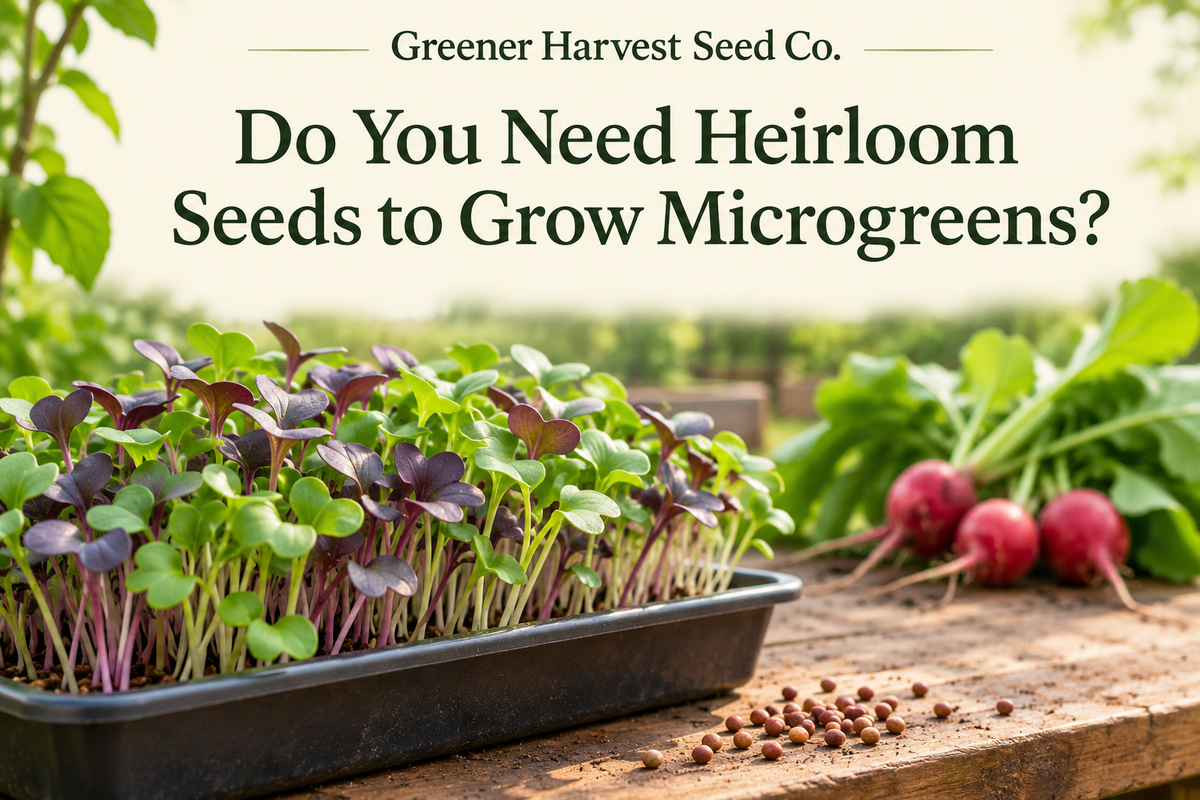
Do You Need Heirloom Seeds to Grow Microgreens?
If you have shopped for vegetable seeds, you have probably seen the word “heirloom” on seed packets. But do your seeds need to be heirloom to grow good microgreens?
No. Heirloom seeds can be used for microgreens, but the heirloom label does not determine how well a tray will grow. It describes a variety’s history, while microgreen growers are mainly interested in how the plant performs as a young seedling.
What Are Heirloom Seeds?
Heirloom seeds generally come from older, open-pollinated varieties that have been preserved and passed down through generations.
Gardeners often choose them for their history, distinctive characteristics, and ability to produce seed that grows true to the variety when pollination is properly managed.
However, “heirloom” does not automatically mean certified organic or suitable for microgreen production.
Why Heirloom Status Matters More for Mature Crops
Many characteristics that make an heirloom variety special become apparent as the plant matures. These might include a vegetable’s mature size, shape, color, or flavor.
For example, a gardener may choose a particular radish for its distinctive roots. When growing that radish as microgreens, you harvest the young stems and leaves before those mature roots develop.
Seed saving is another reason gardeners choose heirlooms. Microgreens are harvested long before flowering and seed production, so that benefit does not come into play during a typical microgreen grow.
Can You Grow Heirloom Seeds as Microgreens?
Yes! Heirloom and microgreen are not competing categories.
Heirloom describes the variety’s background. Microgreen describes the stage at which you harvest the plant.
A suitable variety can be both heirloom and useful for microgreens. Microgreen seeds are the seeds of vegetables and herbs harvested young, rather than a separate botanical type of seed.
The important point is that the heirloom label alone does not tell you whether a particular seed is appropriate for growing microgreens.
What Matters When Choosing Microgreen Seeds?
For microgreen production, focus on:
- Suitability: Choose a crop that is edible at the seedling stage and seed offered for that use.
- Germination: Look for dependable germination and healthy seedlings.
- Consistent growth: Even development makes trays easier to manage and harvest.
- Flavor and color: Choose varieties that deliver the taste and appearance you want in the young crop.
- Treatment status: Avoid seed with pesticide treatments unsuitable for microgreen production.
- Value: Consider seed cost alongside the usable harvest each tray produces.
Not every plant with edible mature vegetables has edible seedlings, so always confirm suitability before planting a new crop.
Does Non-GMO Mean Heirloom?
No. A seed does not need to be heirloom to be non-GMO.
These labels describe different things:
- Heirloom: The variety’s history and preservation.
- Non-GMO: Its genetic engineering status.
- Certified organic: Production and handling under organic certification requirements.
- For microgreens: Its intended growing use.
Read each product’s description rather than assuming one label guarantees the others.
Choose Seeds for Your Growing Goals
Heirloom varieties are valuable for preserving gardening traditions, enjoying mature crop characteristics, and saving seed.
When growing microgreens, the focus shifts to the young plant. Germination, flavor, color, and consistent seedling growth are more useful considerations than the heirloom label alone.
At Greener Harvest Seed Co., we encourage growers to choose seeds that fit their growing goals. Whether you are planting your first tray or supplying regular customers, start with seed suited to microgreen production and test new varieties in your own setup.
Explore our selection at greenerharvestseeds.com.