
ow to Grow Genovese Basil Microgreens
Genovese basil microgreens offer the familiar aroma and flavor of mature basil in a tender, compact crop. They can be used on pasta, pizza, tomato dishes, salads, sandwiches, and chef plates. Their flavor and name make them easy to market, but the crop behaves differently from kale, broccoli, or radish.
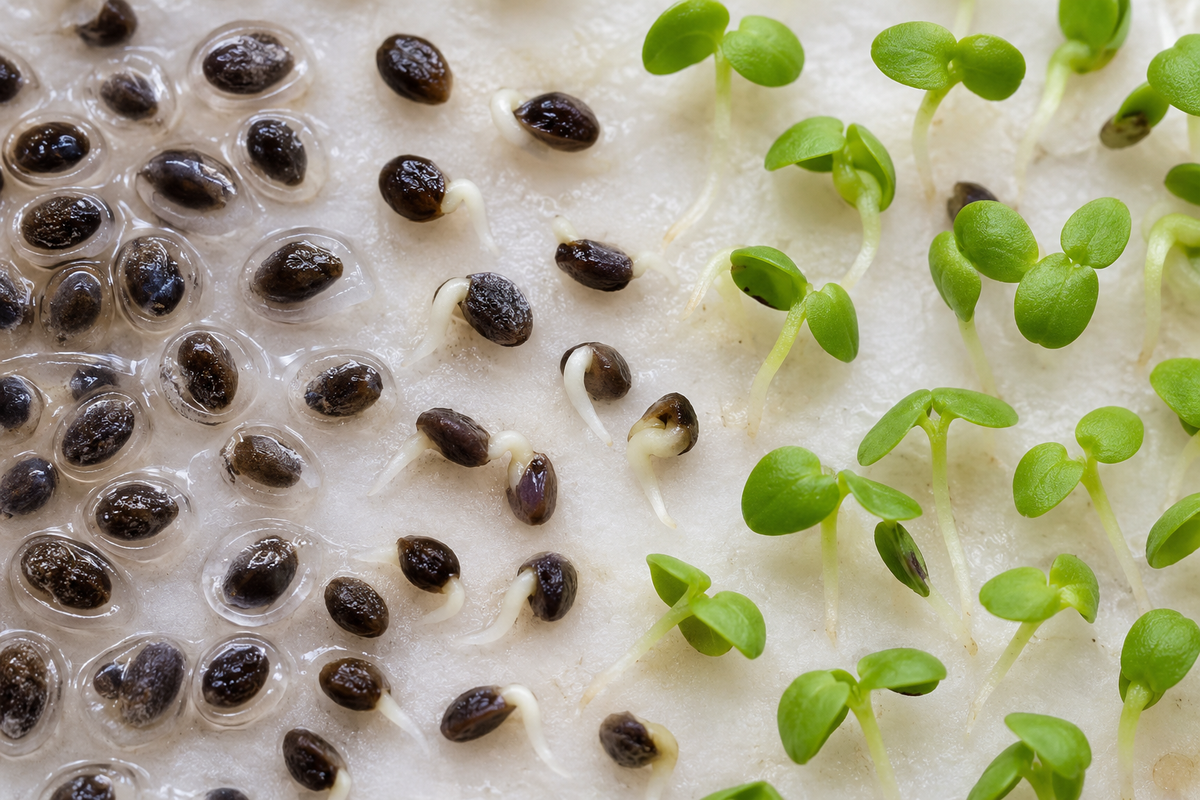
Basil seed is mucilaginous. When exposed to water, it forms a clear gel around the seed. That is normal, but it means traditional soaking can create a sticky mass that is difficult to spread.
Do Not Treat Basil Like a Large Soaking Seed
Peas and sunflower are commonly soaked before planting. Basil usually requires a different approach. Once fully wet, the seed can clump together. Instead, many growers sow dry seed evenly onto a pre-moistened medium and then mist carefully to begin hydration in place.
Use a measured amount and sow slowly. The seed is dark and small, so good lighting over the work area helps you see gaps and crowded sections.
Prepare the Tray
Use a clean tray and a fine, level growing medium. Large pieces or deep grooves make even sowing difficult. Moisten the medium evenly before planting without leaving water on the surface.
After sowing, apply enough mist to hydrate the seed without washing it into piles. The gel will help the seed remain moist, but the tray still needs balanced humidity. They can be placed under a humidity dome under light or in blackout, depending on the method of growing you prefer.
Watch Germination Closely
Covering methods vary, but basil should be checked every day. Maintain humidity without sealing the crop in stagnant, dripping conditions. Look for roots entering the medium and seedlings establishing across the tray.
Basil may require more time than quick brassicas. Label every tray with the sow date so it is not uncovered or discarded simply because it does not match another crop’s schedule.
Introduce Light and Airflow
Move the tray to light once the seedlings are established. Use consistent lighting to encourage compact green growth. Gentle air circulation helps manage humidity, but direct fan pressure can dry the surface or damage a delicate crop.
Because basil leaves are tender, avoid keeping them wet. Once the roots can access water from below, bottom watering can reduce surface disturbance and moisture on the foliage.
Avoid Overwatering
The gel surrounding basil seed can make the surface look wetter than expected. Check the medium beneath it. Add water based on crop need, not appearance alone.
Overwatering, excessive density, and poor airflow can combine to create weak growth. When a tray struggles, review your records before assuming the seed is the only cause.
Harvest for Aroma and Quality
Taste and smell the crop as it develops. Harvest timing affects texture, appearance, and flavor intensity. Cut with a clean blade above the growing medium and handle gently to avoid bruising.
Package only dry, high-quality product and maintain appropriate cold storage. Basil microgreens can help a grower stand out because they connect a familiar culinary flavor with a visually appealing crop. With measured seeding, steady warmth, patient germination, and restrained watering, Genovese basil can become a valuable specialty offering.
Frequently Asked Questions About Basil Microgreens
Why does basil seed become slimy or gelatinous? Basil seed produces mucilage when hydrated. The clear gel is a normal feature, not automatically mold or spoilage. It helps the seed retain moisture but also makes wet seed difficult to spread.
Why is basil germinating more slowly than broccoli? Basil often prefers warmer conditions and follows a different crop schedule from fast brassicas. Check the temperature at tray level, seed moisture, lot information, and sow date before concluding that the tray has failed.
Can basil microgreens be overhead watered? Gentle surface moisture may be necessary during early germination, but established crops are often bottom watered to reduce wet foliage and surface disturbance. Whatever method you use, avoid standing water and document it so employees treat basil consistently.
A Practical Basil Trial
When establishing basil in your grow room, plant several small trays from the same lot and change only one factor, such as temperature or seed density. Keep the medium, light, watering, and sow date identical. Compare emergence, uniformity, crop time, and usable harvest. This method shows which adjustment actually helped. Changing warmth, water, density, and covering at the same time may produce a better tray, but it will not tell you which change should become part of the standard procedure.