
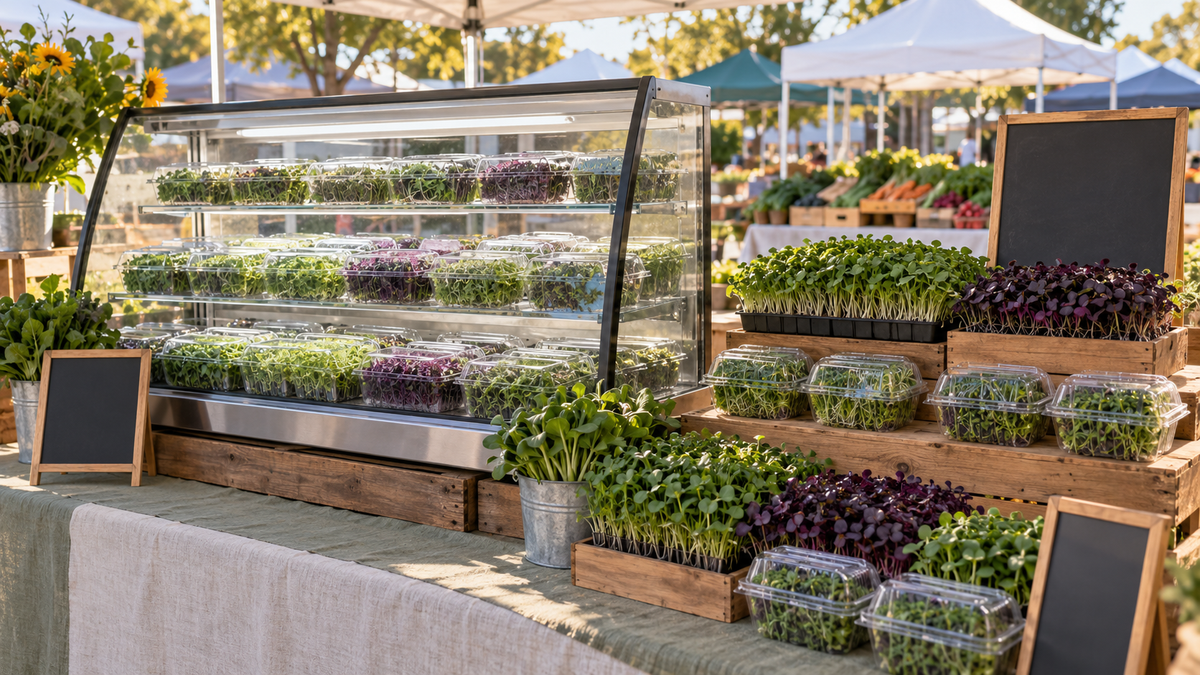
How to Sell Microgreens at a Farmers Market
Farmers markets give microgreen growers a valuable opportunity to meet customers, explain unfamiliar varieties, gather immediate feedback, and build recurring local sales. Unlike an online product page, a market table allows shoppers to see the colors, ask how the greens taste, and understand how to use them.
Success depends on more than placing clamshells in a cooler. A strong farmers-market plan connects production, packaging, pricing, food safety, display, education, and follow-up.
Confirm Market and Local Requirements
Before selling, contact the market manager and the appropriate local or state authorities to confirm licensing, food-safety, labeling, sampling, insurance, refrigeration, and vendor requirements. Rules can differ by location and product handling method.
Ask what equipment is required, how waste and wastewater must be managed, whether electricity is available, and when vendors may load in. Keep permits and documents organized so staff can access them at the event.
Choose a Focused Variety List
More choices do not always produce more sales. A focused menu is easier to explain and helps prevent leftover inventory. Start with recognizable crops and add one or two distinctive varieties.
Mild kale or broccoli can appeal to first-time buyers. Radish provides a peppery option. Sunflower and pea shoots offer crunch and familiar flavors. Sango Radish adds deep purple color, while Afila Tendril Pea offers curling tendrils and a fresh pea taste. Hales Best Cantaloupe can become a conversation-starting specialty crop.
Track sales and leftovers by variety every week. Replace assumptions with actual market data.
Use Clear Packaging and Labels
Packaging should protect the crop, support cold holding, and allow customers to see what they are buying. Clear clamshells are commonly used because they display color and texture, but the container must fit the quantity without crushing the greens.
Labels should meet applicable requirements and make the product easy to understand. Include the variety or mix name, business identity, net quantity when required, handling information, and any other mandatory details.
Use specific product names. “Sango Radish Microgreens” creates more confidence than “purple mix.” A short flavor line such as “peppery radish bite” helps customers choose.
Build a Display That Explains the Product
Create visible signs for each variety with name, flavor, and two or three uses. Keep prices large enough to read without asking. Group products logically, such as mild, spicy, crunchy, and chef-inspired.
Use risers to create height while keeping refrigerated products under proper temperature control. A beautiful display is never a reason to compromise cold holding.
Bring a clean table covering, weights or clips for wind, bags, payment equipment, change if accepted, business cards, a handwashing setup when required, cleaning supplies, and backup labels.
Use Sampling Strategically
Sampling can convert curiosity into a sale, but only when allowed and managed safely. Confirm market rules, protect samples from contamination, use single-service utensils, and follow handwashing and temperature requirements.
Offer a small taste with a simple explanation: “This is Afila pea—it tastes like a fresh pea and has a crisp stem.” Do not overwhelm shoppers with a lecture. Let the flavor lead, then answer questions.
If sampling is not permitted, display high-quality photographs or recipe cards that show the greens in familiar meals.
Price for Profit
Do not copy another grower’s price without knowing your costs. Include seed, media, labor, utilities, packaging, labels, market fees, insurance, transportation, payment processing, samples, unsold product, and owner time.
Calculate cost per package and set a price that supports the business. Bundle offers can increase average transaction value, but discounts should not erase the margin.
Record total sales, units by variety, discounts, waste, and event costs after each market. Compare revenue with the hours spent producing, packing, traveling, setting up, selling, and cleaning.
Teach Customers How to Use Microgreens
Many shoppers are interested but unsure what to do with microgreens. Give practical suggestions: add broccoli or kale to sandwiches, put radish on tacos, use pea shoots in salads, or finish eggs with cilantro microgreens.
Recipe cards and QR codes can extend the interaction. Link to a page with storage guidance, recipes, your growing story, and a way to reorder.
Avoid exaggerated health claims. Accurate descriptions of flavor, freshness, and culinary use build more durable trust.
Turn Market Shoppers Into Repeat Customers
Invite customers to join an email list, follow your social accounts, preorder for the next market, or ask about subscription options. Make the next step easy and specific.
Remember returning shoppers and ask what they enjoyed. Their feedback can reveal new package sizes, varieties, recipes, or pickup locations.
Plan Production From Sales Data
Farmers-market demand changes with weather, holidays, tourism, competing events, and season. Use previous sales to create a production forecast, then adjust carefully.
Track sell-through percentage rather than celebrating revenue alone. Selling out early can mean missed sales, while large leftovers reduce profit. The goal is a production level that serves customers without chronic waste.
Selling microgreens at a farmers market combines agriculture with retail. When growers follow local rules, choose a focused menu, explain flavor clearly, protect product quality, and measure results, each market becomes more than a sales day—it becomes direct research for building a stronger local microgreens business.