
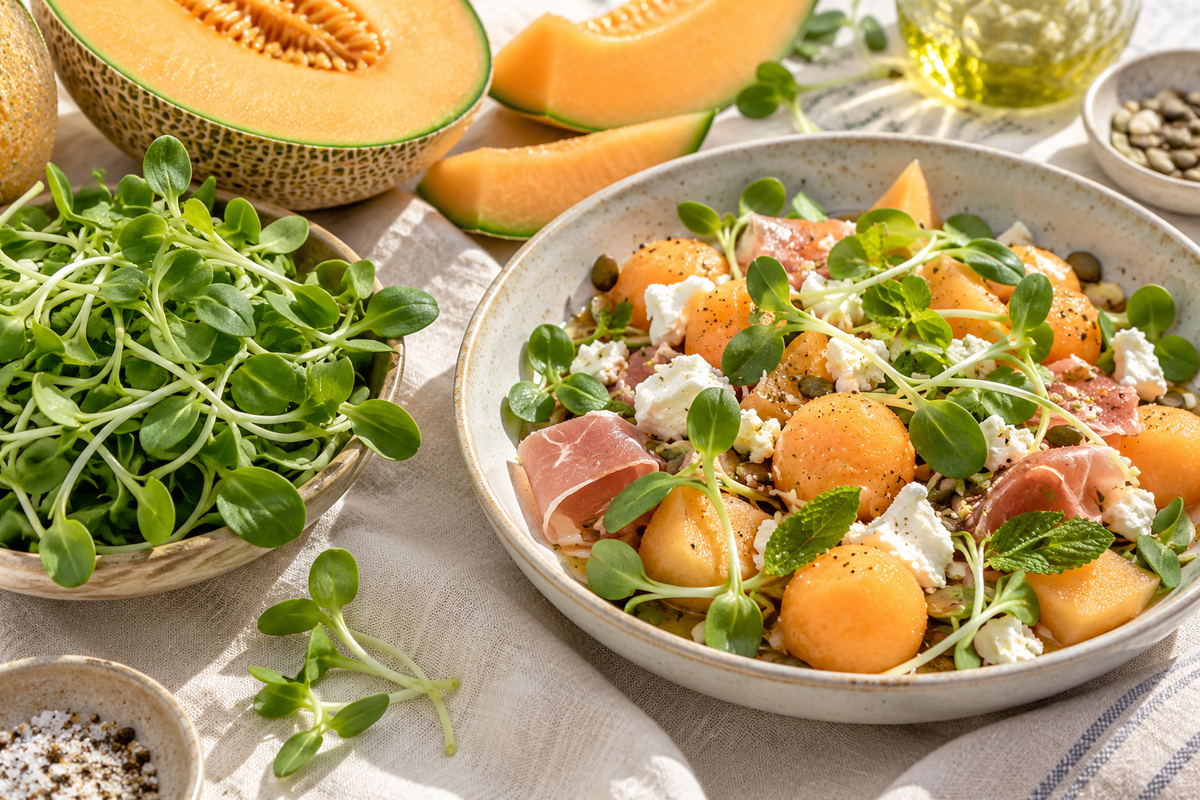
How to Grow Cantaloupe Microgreens and What They Taste Like
Cantaloupe microgreens are an unexpected addition to a grower’s menu. Their tender green leaves and subtle melon-like flavor give customers something different from familiar brassicas, spicy radishes, and substantial pea shoots. Please note that the only suitable variety of Cantaloupe for microgreens is Hale's Jumbo Best. Others are extremely bitter.
The crop can become an effective farmers-market sample, restaurant conversation starter, or specialty retail offering. Hales Best Jumbo is one cantaloupe variety grown for microgreens, but every seed lot should be tested in the system where it will be produced.
What Do Cantaloupe Microgreens Taste Like?
The flavor is fresh, mild, and gently sweet, with a recognizable melon character. It is not the same as biting into ripe fruit, but many customers notice the connection immediately.
Cantaloupe microgreens can be used in fruit-forward salads, summer dishes, wraps, desserts, smoothies, or as a garnish. When marketing them, let customers taste the crop rather than making exaggerated promises.
Prepare Seed and Equipment
Begin with clean trays, a clean work area, and seed intended for cultivation. Review the supplier’s guidance for the seed lot. If you use a soaking step, document the amount of seed, water, time, and temperature, then drain thoroughly.
Large wet seed can clump. Break up clusters while sowing so the crop does not develop dense islands.
Sow on an Even Medium
Fill the tray with a level layer of growing medium and pre-moisten it evenly. Spread cantaloupe seed from edge to edge, then gently press it into contact with the surface.
Do not overcrowd the tray simply because the seed is larger. The seedlings need room for roots, stems, leaves, and air movement.
Monitor Germination
Use your established covering or stacking method and inspect the crop daily. Look for roots entering the medium and emergence across the entire tray. A germination schedule should guide observation, not replace it. Cantaloupes require a warmer setting to germinate. Heat mats are perfect for this!
If hulls remain attached, review hydration and humidity. Some hulls may still require gentle removal during quality control.
Provide Light and Balanced Water
Move the established crop into consistent light. Watch stem length, leaf development, and color. Adjust light placement based on the crop’s response and equipment instructions.
Once roots are established, bottom watering helps keep the foliage dry. Larger seedlings can use substantial water as they develop, but standing water still creates risk. Check tray weight and medium moisture before watering.
Provide gentle room airflow. Avoid directing a fan so strongly that one side dries or leans.
Harvest and Present the Crop
Taste cantaloupe microgreens throughout development to identify the stage with the best combination of tenderness, appearance, and flavor. Cut with sanitized tools above the medium and remove damaged growth or debris.
For retail sales, use a clear package and a simple flavor description such as “mild, fresh, and subtly sweet.” At a farmers market, a small sample can do more than a long explanation. Restaurants may appreciate ideas for fruit salads, chilled dishes, cocktails, and plated desserts.
Cantaloupe microgreens help a grower offer discovery, not just another green. Grow them consistently, photograph the actual crop, and let their unexpected flavor create the conversation.
Frequently Asked Questions About Cantaloupe Microgreens
Do cantaloupe microgreens taste like melon? They can have a mild, fresh sweetness with a recognizable melon note, although flavor changes with variety and harvest stage. Sampling is the clearest way to introduce the crop. The only suitable seed for Cantaloupe Microgreens is Hales Jumbo Best Cantaloupe Seed.
Should cantaloupe seed be soaked? Grower methods differ. Review guidance for the seed lot and compare a controlled soaked and unsoaked trial if needed. If soaking, use clean equipment and water, document the process, and drain thoroughly before sowing.
How should cantaloupe microgreens be marketed? Lead with flavor and culinary use. Clear wording such as “tender greens with a subtly sweet melon flavor” sets realistic expectations. Use photographs of the actual crop and offer samples where local rules and your food-safety procedures permit them.
Store feedback with the related seed lot and harvest date so you can connect customer response with crop performance.
Run a Customer Taste Test
Cantaloupe is ideal for gathering direct feedback because many shoppers have never encountered it as a microgreen. Offer a controlled sample when permitted and ask customers to describe the flavor before you tell them what to expect. Record the words they naturally use and the dishes they suggest. That language can improve signs, product descriptions, and sales conversations. Also track how many tasters buy. Interest and compliments are useful, but conversion and repeat purchases reveal whether the crop deserves regular production space.