
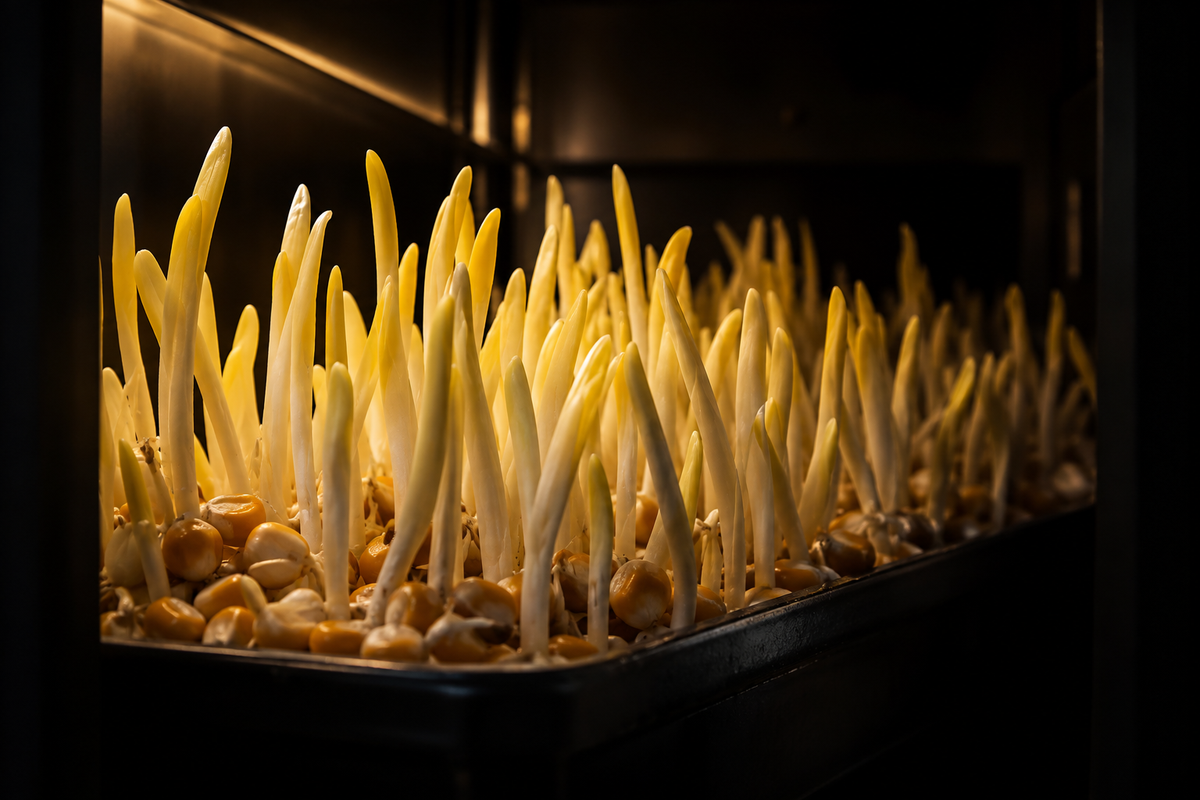
How to Grow Yellow Popcorn Shoots in the Dark
Yellow popcorn shoots are one of the most visually unusual crops in the microgreen world. Their bright yellow stems and leaves have a sweet corn flavor and crisp texture. The defining feature is not a special yellow variety—it is the growing method.
Corn shoots are kept in darkness so they do not develop chlorophyll and turn green. This process is called etiolation. Once exposed to light, the shoots begin greening and their flavor and appearance change.
Use Seed Intended for Cultivation
Choose properly identified popcorn seed intended for growing. Seed sold as decorative corn, livestock feed, or bird feed may not have the identity, handling, testing, or suitability required for food-crop production.
Record the supplier, lot number, date received, and any available germination or testing information. Run a small trial before scheduling a large harvest.
Soak and Drain the Seed
Corn is a large, hard seed and is commonly soaked before planting. Use a clean, food-appropriate container and potable water. Follow a documented soaking procedure suited to your seed lot and system.
Drain the seed thoroughly. Standing water and poorly drained seed create avoidable problems before the crop even enters the tray.
Plant With Room to Grow
Prepare a clean tray with evenly moistened growing medium. Spread the soaked seed in a uniform layer. Avoid deep piles, especially around corners.
Press the seed into contact with the medium. Some growers use a light covering, another tray, or controlled weight during early growth. Whatever method you choose, apply it consistently and inspect the crop daily.
Maintain Darkness
The crop must remain dark throughout production to preserve its yellow color and sweeter flavor. A simple cover that leaks light may create green tips or uneven color.
Dark does not mean ignored. Open the growing area as needed to check moisture, smell, root development, and crop condition. Darkness combined with excess moisture and stagnant air can hide problems until they are advanced.
Balance Moisture and Air
Large seeds and dense root systems require water, but the tray should not remain flooded. Once roots are established, bottom watering can provide moisture without repeatedly wetting the shoots.
Maintain appropriate room ventilation around the covered system. Airflow should not introduce light or dry the crop unevenly.
Harvest Before Greening
Harvest at the height and tenderness preferred by your customers, before light exposure changes the crop. Use a clean knife and cut above the medium. Corn shoots can be fibrous if allowed to grow too far, so evaluate texture as well as height.
After harvest, protect the shoots from unnecessary light and heat. Package them without crushing and keep them under the cold-storage conditions required by your process.
How to Use Yellow Popcorn Shoots
The sweet corn flavor works in salads, wraps, tacos, chilled dishes, chef plates, and as a tasting sample. Their color makes them a natural conversation starter at markets.
Explain the growing method clearly: the shoots are yellow because they are intentionally grown in darkness. That short story helps customers understand why the crop looks different and turns a new product into a memorable experience.
Frequently Asked Questions About Popcorn Shoots
Why did my popcorn shoots turn green? Light triggers chlorophyll development. Even brief or repeated light exposure can create green tips or sections. Review covers, seams, inspection practices, and the path from production to storage.
Are popcorn shoots the same as corn microgreens? The terms are sometimes used loosely, but yellow popcorn shoots are specifically grown in darkness to remain etiolated. A corn crop grown under light will green and develop a different flavor and texture.
Can grocery-store popcorn be planted for shoots? Seed identity, treatment, germination, handling, and suitability may be uncertain. For food-crop production, use properly identified seed intended for cultivation from a dependable supplier and maintain lot records.
Plan for a Dark Production Area
Before adding popcorn shoots to a menu, decide where the crop will remain dark without disrupting inspection, watering, sanitation, or harvest. A cover should be washable, stable, and easy for employees to use the same way every time. Label each batch clearly because staff cannot rely on normal visual checks from across the room. Document when covers are opened, how trays are watered, and when the shoots are harvested. A specialty crop becomes much easier to scale when darkness is part of the facility workflow rather than an improvised step.